A Cathedral Model Seminary
On Campus Learning
Holy Scripture and the early writings of the Apostles and Early Church Fathers show us that the Apostles and bishops of the Ancient Church trained the next leadership based on Christ’s model of disciples traveling with Him. Eventually, theological education became centered around the cathedral and the bishop supporting theologians and a community of scholars under him. The method of training was tutorial—reading through the masters who had gone before; some lecturing but usually in conjunction with the daily office at the cathedral. Spiritual formation was in the context of the rhythm of the worship of the cathedral and local parishes.
Unfortunately, theological education has been separated from the church progressively through history. Universities that were once under the church separated due to corruption in order to preserve Biblical education; then theological education separated from the universities for the same reasons; seminaries became church and independent board sponsored; Bible chairs at American universities became “religion” chairs, which have since been folded into sociology and psychology departments.
It is the intent of the Diocese of Mid-America of the Reformed Episcopal Church, and that of Cranmer Theological House, to mindfully return to the cathedral model of seminary, bringing forward to the present the method of teaching, tutoring, training, and theological education founded in the Ancient Church. Read more about Spiritual Formation.
Modular Schedule Information
Current Courses
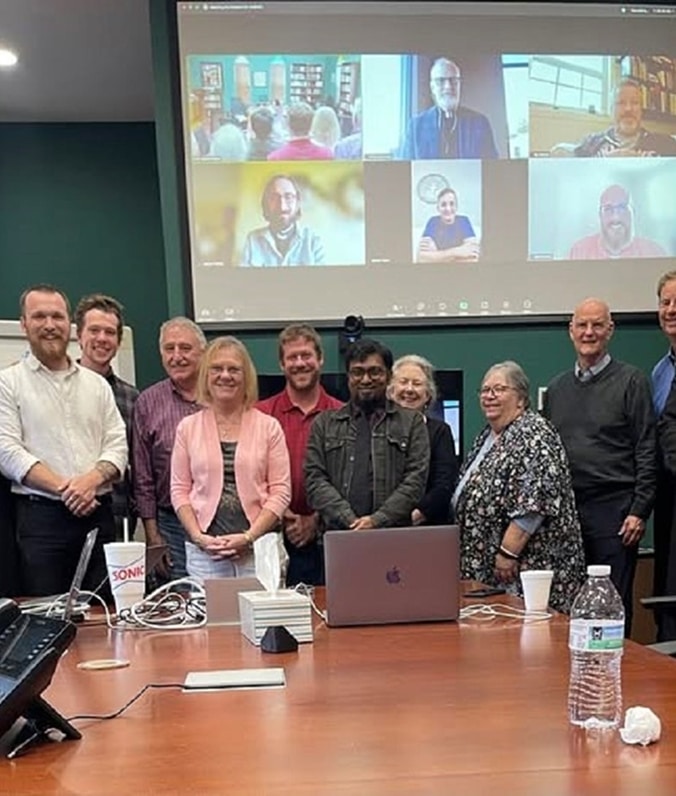
CTH utilizes a modular schedule to accommodate the seminary’s working students. Classes are offered on a quarterly basis (Fall, Winter, Spring, Summer) throughout the school year. CTH courses are taught in a one-weekend format. Unless otherwise noted, classes meet on the assigned weekend as follows: Friday noon-7 pm; Saturday 8 am-7 pm; Sunday 11:30–3:30 pm. Additional pre-and post-class assignments, including a final paper, are required.
Additional courses outside the residential classes are offered to accommodate the student’s ability to continue through each program of study in a timely manner. These classes may be completed through the External Studies program as well as through Directed Studies with individual instructors.
A full-time schedule means that the student could potentially complete up to ten residential courses and several other courses via external or directed study per year.
2026 Modular Courses
| Course Name | Credit Hours | Format | Professor | Term Date |
|---|---|---|---|---|
| Christian Apologetics(PR 701) | 3 Credits | In Person and Online | The Very Rev. Frank Levi | Fall 2026 Sept 18-20 |
| Biblical Theology II: New Testament (BS 602) | 3 Credits | In Person and Online | The Rt. Rev. Dr. Charles Camlin | Fall 2026 Oct 9-11 |
| OT Historical Books (OT 601) | 3 Credits | In Person and Online | The Rev. Nevada DeLapp | Fall 2026 Nov 13-15 |
| Doctrines of God, Christ, and Atonement (DT 501) | 4 Credits | In Person and Online | The Rev. Dr. Gerald McDermott | Fall 2026 Dec 11-13 |
Online Courses
A select number of Cranmer House classes are taught via Zoom classes that meet on Monday, Tuesday or Thursday nights for 2 hours a week over an 11-week course.
| Course Name | Credit Hours | Format | Professor | Term Date |
|---|---|---|---|---|
| Hebrew 1 (BL 601) | 3 Credits | Online | The Rev. Dr. Joshua Harper | Fall 2026 Sept 1 - Dec 31 |
| Medieval Church History (CH 601) | 3 Credits | Online | The Rev. Dr. Charles Erlandson | Fall 2026 Sept 1 - Dec 31 |
| Biblical Womanhood (DS 722) | 3 Credits | Online | Dss. Teresa R. Johnson | Fall 2026 Sept 1 - Dec 31 |
Independent, Self-Directed Pace
External Independent Studies
A number of CTH courses are available via distance learning, which can be completed externally from the seminary. CTH is committed to the classroom environment as the primary method of instruction, as required by the principle of formation. CTH also recognizes that, for various reasons, students enrolled in a degree program may need to complete some coursework outside of the classroom environment.
Degree Students:
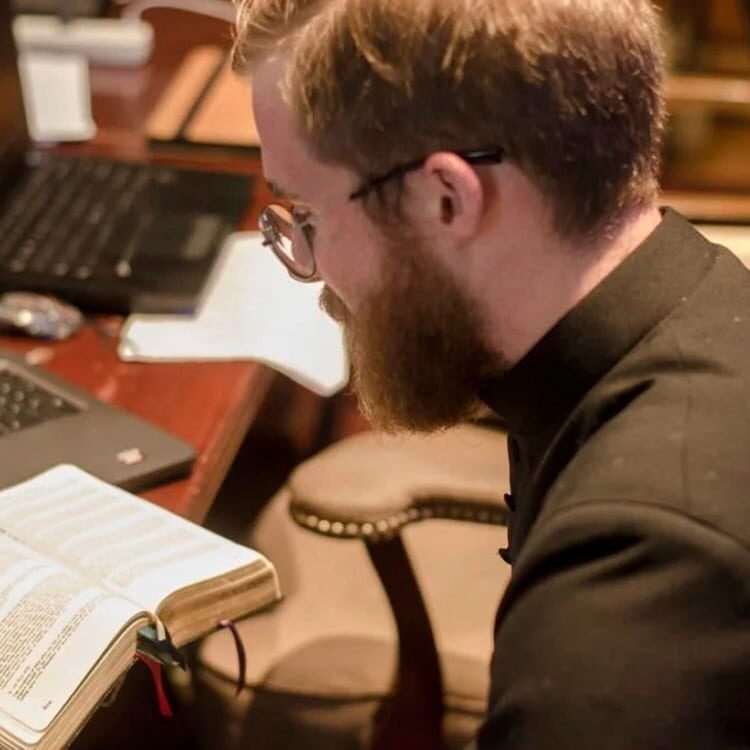
Students who are enrolled in the M.A.R., Diaconal Certificate, Deaconess Certificate, and Anglican Studies Certificate programs or completing the Th.M. may complete all courses via the External Studies program. M.Div. and M.T.S. Students (only): The maximum amount of credit that may be obtained via either directed or external study may not exceed one-third (1/3) of the total number of credits needed to graduate.
Non-Degree Students:
By providing several theological courses as External Studies options, CTH has made orthodox theological training available for lay persons on a wider scale. Non-Degree Students may also audit External Studies courses, as well as campus courses. For additional information regarding Non-Degree courses, contact the Assistant Academic Dean, The Very Rev. Kasey Gage at [email protected].
Course Credit:
Students taking an External Studies course for credit must complete the seminary’s application process and be accepted as a CTH student. When a course is ordered, the student will be put in contact with a professor and provided with the directions, requirements, and policies for the course. To be eligible for credit, courses must be completed within 90 days of the receipt of the course materials.
Course Audit:
Those who audit an External Studies course will not have direct access to the course professor but will receive all of the course materials.
Tuition and Fees:
The cost for External Studies courses is the same as that for classroom studies, whether for credit or to audit.
External Studies Course Options


Discover What We Have to Offer
Download Our 2026 Catalog
Explore our courses, formation opportunities, and academic vision, and take the next step in your theological education.

